Content Menu
● Understanding SMT Trimmers and Express PCB
>> What is an SMT Trimmer?
>> What is Express PCB?
● The Role of SMT Trimmers in Signal Tuning on Express PCBs
>> Precision and Flexibility in Tuning
>> Improved Signal Integrity
>> Space and Cost Efficiency
>> Ease of Automated Assembly and Testing
● Applications of SMT Trimmers in Express PCB Signal Tuning
>> RF and Wireless Communication Circuits
>> Oscillator and Frequency Control Circuits
>> Sensor Calibration and Signal Conditioning
>> Power Supply and Voltage Regulation
>> Audio and Analog Signal Processing
● Benefits of Using SMT Trimmers with Express PCB Services
● Best Practices for Implementing SMT Trimmers in Express PCB Designs
● Conclusion
● FAQ
>> 1. What is the main advantage of using SMT trimmers in express PCB signal tuning?
>> 2. How do SMT trimmers improve high-frequency circuit performance?
>> 3. Are SMT trimmers compatible with automated PCB assembly?
>> 4. What types of adjustments can SMT trimmers provide?
>> 5. How should SMT trimmers be positioned on a PCB for effective tuning?
In the fast-paced world of electronics design and manufacturing, achieving precise signal tuning on printed circuit boards (PCBs) is critical for optimal device performance. Surface Mount Technology (SMT) trimmers have become an essential component in this process, especially when working with express PCB services that demand quick turnaround times without compromising quality. This article explores how an SMT trimmer improves express PCB signal tuning, highlighting its role, advantages, and practical applications in modern electronics.
Understanding SMT Trimmers and Express PCB
What is an SMT Trimmer?
An SMT trimmer is a type of adjustable component used on PCBs to fine-tune electrical parameters such as resistance, capacitance, or inductance. Unlike traditional through-hole trimmers, SMT trimmers are designed for surface mounting, which allows them to be soldered directly onto the surface of the PCB. This design offers several benefits including smaller size, better high-frequency performance, and compatibility with automated assembly processes.
SMT trimmers come in various forms:
- Resistive trimmers (trimpots): Used to adjust resistance values precisely.
- Capacitive trimmers: Used for fine-tuning capacitance, especially in RF circuits.
- Inductive trimmers: Used for adjusting inductance by altering coil configurations.
These trimmers enable precise calibration and tuning after the PCB has been manufactured, which is crucial for achieving the desired signal characteristics.
What is Express PCB?
Express PCB refers to fast PCB fabrication and assembly services that prioritize quick delivery times while maintaining quality standards. These services are vital for rapid prototyping and small to medium volume production runs where time-to-market is critical. Express PCB manufacturers often incorporate SMT components to streamline assembly, reduce costs, and improve circuit performance.
The Role of SMT Trimmers in Signal Tuning on Express PCBs
Signal tuning on PCBs involves adjusting the electrical characteristics of circuits to optimize performance parameters such as frequency response, impedance matching, and signal integrity. SMT trimmers play a pivotal role in this process by allowing engineers to make fine adjustments without redesigning or remanufacturing the board.
Precision and Flexibility in Tuning
SMT trimmers provide a high degree of precision due to their multi-turn and fine adjustment capabilities. This precision is essential in RF and high-frequency circuits where small changes in capacitance or inductance can significantly affect the resonant frequency and signal quality. For example, tuning loop antennas or oscillator circuits requires adjusting trimmer capacitors to peak output power and correct frequency alignment.
The ability to adjust these parameters post-assembly means that express PCBs can be quickly tuned to meet exact specifications, reducing the need for multiple prototype iterations and speeding up the development cycle.
Improved Signal Integrity
By enabling precise control over component values, SMT trimmers help minimize signal distortion and losses. Surface mount components inherently reduce parasitic inductance and resistance compared to through-hole parts, which is beneficial for high-frequency signals. SMT trimmers enhance this advantage by allowing fine-tuning directly on the PCB, ensuring shorter signal paths and better impedance matching.
Space and Cost Efficiency
SMT trimmers are compact and designed for surface mounting, which saves valuable PCB real estate. This compactness allows more components to fit on the board, enabling complex circuits in smaller packages. Additionally, SMT trimmers reduce assembly time and handling costs, which aligns well with the goals of express PCB manufacturing to deliver cost-effective and rapid solutions.
Ease of Automated Assembly and Testing
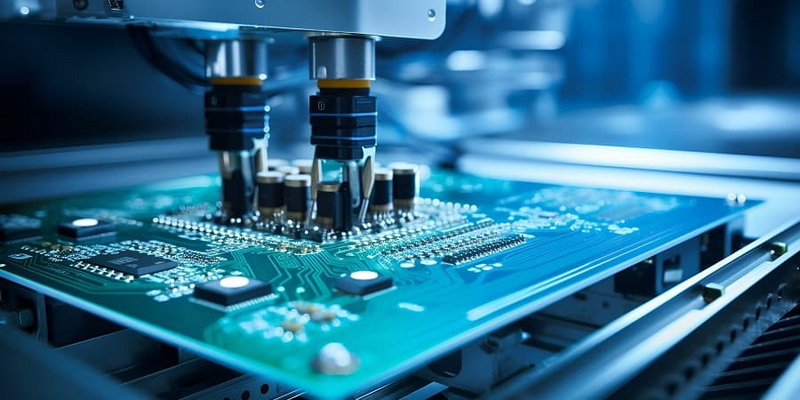
Express PCB services often rely on automated pick-and-place machines for component assembly. SMT trimmers are compatible with these automated processes, unlike many traditional trimmers that require manual insertion. This compatibility ensures consistent placement accuracy and reduces human error during assembly.
Furthermore, SMT trimmers facilitate easier testing and calibration during production. Their top or side adjustment features allow technicians to tune circuits without disassembling the board, streamlining quality control and troubleshooting.
Applications of SMT Trimmers in Express PCB Signal Tuning
RF and Wireless Communication Circuits
In RF applications, tuning the antenna and matching networks is critical for maximizing signal strength and minimizing interference. SMT trimmer capacitors and inductors are commonly used to adjust resonant frequencies and bandwidths on express PCBs, ensuring that wireless devices perform optimally in their operating frequency bands. This fine-tuning capability is especially important in devices such as Wi-Fi routers, Bluetooth modules, and cellular transceivers, where even slight mismatches can degrade performance or increase power consumption.
Oscillator and Frequency Control Circuits
Oscillators require precise frequency tuning to maintain stability and accuracy. SMT trimmers enable fine frequency adjustments by modifying capacitance or inductance values, which is essential in clock generation and signal synthesis circuits used in communications and instrumentation. This capability is vital for applications like GPS receivers, frequency synthesizers, and timing modules where accuracy directly impacts system reliability.
Sensor Calibration and Signal Conditioning
Many sensor circuits require calibration to compensate for manufacturing tolerances or environmental variations. SMT trimmers allow for on-board adjustment of gain, offset, or filtering parameters, enhancing sensor accuracy and reliability on express PCBs. This is particularly useful in precision measurement devices, medical instrumentation, and industrial control systems where sensor outputs must be finely tuned to ensure correct readings.
Power Supply and Voltage Regulation
Voltage regulators and power management circuits benefit from SMT trimmers to adjust output voltages or current limits. Multi-turn SMT trimmers provide fine control over these parameters, improving power efficiency and protecting sensitive components. In battery-powered devices or energy-sensitive applications, this tuning can extend battery life and enhance overall system stability.
Audio and Analog Signal Processing
In audio electronics and analog signal processing circuits, SMT trimmers are used to adjust tone controls, filter characteristics, and gain stages. This fine-tuning ensures optimal sound quality and signal fidelity, which is critical in professional audio equipment, hearing aids, and consumer electronics.
Benefits of Using SMT Trimmers with Express PCB Services
- Faster Time-to-Market: Quick tuning capabilities reduce prototype iterations and accelerate product development cycles.
- Enhanced Performance: Precise adjustments improve signal quality, reduce noise, and optimize circuit functionality.
- Reduced Manufacturing Costs: Compatibility with automated assembly lowers labor costs and improves yield.
- Compact Designs: Smaller component size enables high-density PCB layouts.
- Simplified Maintenance: Easy post-assembly tuning facilitates troubleshooting and repairs without board replacement.
- Improved Reliability: Fine tuning reduces the risk of signal degradation and component stress, increasing product lifespan.
Best Practices for Implementing SMT Trimmers in Express PCB Designs
- Design for Accessibility: Ensure trimmers are placed where adjustment tools can reach after assembly. This often means placing trimmers near the edge of the PCB or in areas free of other components.
- Select Appropriate Trimmer Types: Choose multi-turn trimmers for applications requiring high precision and single-turn for less critical adjustments. Consider the adjustment range and mechanical robustness required.
- Consider Thermal and Mechanical Stability: Use sealing or locking compounds to prevent vibration-induced drift and ensure long-term stability of the tuning settings.
- Integrate with Testing Procedures: Incorporate tuning steps in quality control to verify performance before final shipment. Automated test setups can include trimmer adjustment routines.
- Optimize PCB Layout: Minimize parasitic effects by placing trimmers close to the components they adjust and keeping leads short. Proper grounding and shielding can further enhance signal integrity.
- Document Adjustment Procedures: Provide clear instructions and specifications for tuning to ensure consistency across manufacturing and field servicing.
Conclusion
SMT trimmers significantly enhance the signal tuning process on express PCBs by providing precise, flexible, and efficient adjustment capabilities. Their compact size, compatibility with automated assembly, and ability to fine-tune critical circuit parameters make them indispensable in modern electronics manufacturing. By integrating SMT trimmers into express PCB designs, engineers can achieve superior signal integrity, reduce development time, and lower production costs, ultimately delivering high-performance products to market faster.
The synergy between SMT trimmers and express PCB services enables rapid prototyping and production without sacrificing quality or performance. As electronic devices continue to become smaller, faster, and more complex, the role of SMT trimmers in precise signal tuning will only grow more vital.
FAQ
1. What is the main advantage of using SMT trimmers in express PCB signal tuning?
SMT trimmers offer precise and flexible adjustment of electrical parameters directly on the PCB, enabling quick and accurate signal tuning without the need for multiple prototype iterations.
2. How do SMT trimmers improve high-frequency circuit performance?
By reducing parasitic resistance and inductance and allowing fine-tuning of capacitance and inductance values, SMT trimmers help optimize impedance matching and signal integrity in high-frequency circuits.
3. Are SMT trimmers compatible with automated PCB assembly?
Yes, SMT trimmers are designed for surface mounting, making them fully compatible with automated pick-and-place machines used in express PCB manufacturing.
4. What types of adjustments can SMT trimmers provide?
SMT trimmers can adjust resistance, capacitance, and inductance values, allowing fine calibration of gain, frequency, offset, and other critical circuit parameters.
5. How should SMT trimmers be positioned on a PCB for effective tuning?
They should be placed in accessible locations on the PCB, with consideration for adjustment tool access after assembly, and close to the components they influence to minimize parasitic effects.


